
Outscraper alternative: a data scraper, or a web-design lead tool?
Everything here is taken from Outscraper’s own pages and from ours.
Looking for an Outscraper alternative to help you sell websites? Start here: these two are not really the same species of tool, and that is the entire comparison. Outscraper is a data scraper — it gathers business records from around the web and gives you the raw rows. LeadReef is a finished tool aimed at one job: spotting local businesses that need a new site and pitching them.
This is our page, so we will name the bias right away. As a data engine, Outscraper is wider and more programmable than anything we ship, and we will point out where. What it will not do is assess a site, build a page, or write a pitch. LeadReef exists precisely to fill that gap.
The short answer: Outscraper sells raw business data from 50+ sources, priced per record and served through an API. LeadReef spots local businesses whose website is failing, scores them, builds the redesign and drafts the pitch. Choose Outscraper for a data pipeline and LeadReef for web-design sales; both give you a free way in.
Skim the table first, then read on for why each row falls where it does.
| Feature | LeadReef | Outscraper |
|---|---|---|
| What it is | A ready-made product for pitching website redesigns | A raw-data scraping platform with an API |
| Free way to try it | Yes. First 10 leads free, no card | Yes — the first 500 places are free |
| Data breadth | Three, matched to the task: Maps, Recent Ads, Open Web (the last two on Pro) | More than 50 sources across the web |
| Judges the site, flags failing leads | Yes — a 0–100 opportunity score, plus missing and failing sites | No — it only hands back raw records |
| Builds the prototype | Yes — a prototype page | No |
| Drafts the outreach | Yes — a cold email and SMS for each business | No |
| Export, API and scale | No public API and no bulk raw export | CSV, Excel, a complete API and bulk pulls |
| Referral program | Yes — recurring, with 6-month attribution | Yes — it pays referrers a cut |
| Best for | Sellers after a ready-to-send web-design pitch | Developers after raw data from many sources |
What Outscraper actually is
Outscraper is a data-extraction platform. It scrapes public business data from Maps and over fifty other sources — review sites, directories, marketplaces — and returns it as rows with contact details attached. You can grab it in bulk, export to CSV or Excel, or pipe it straight into your own system via its API. It is aimed at marketers, researchers and developers who need data to work with. All of this is laid out on their site.
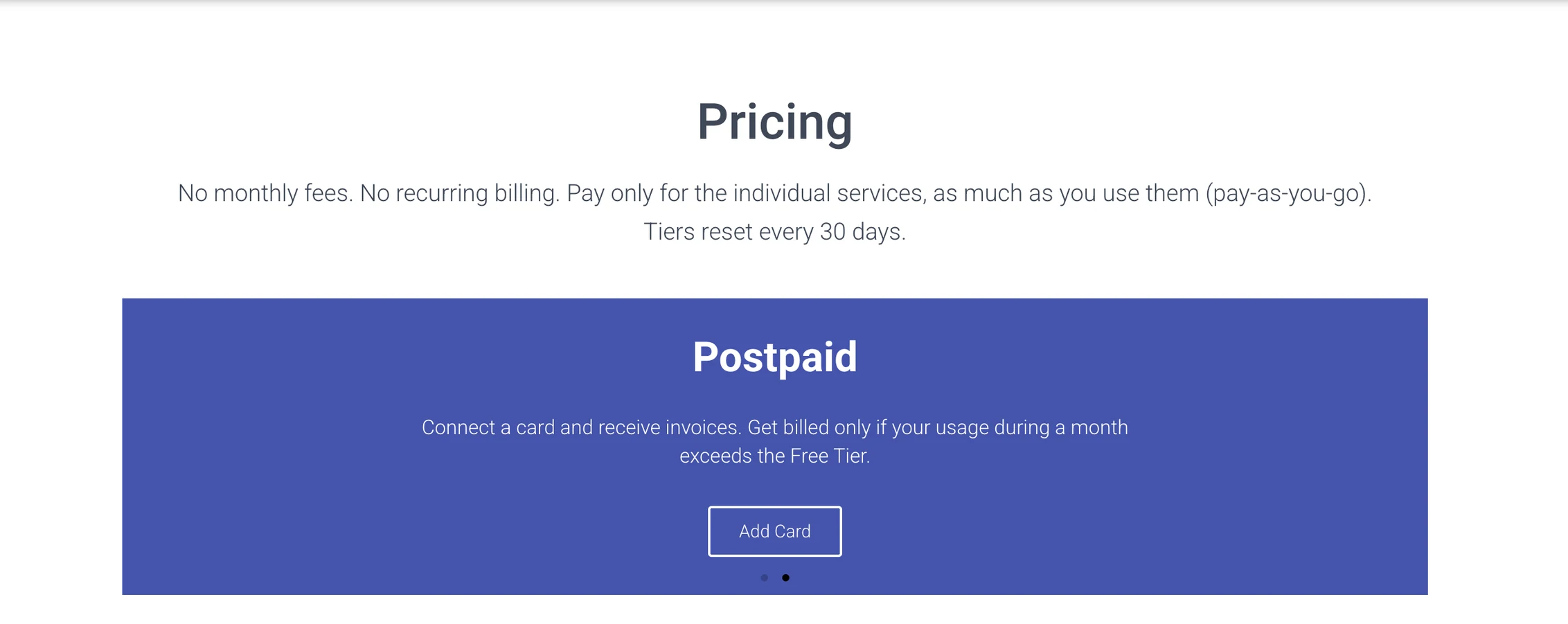
Outscraper charges pay-as-you-go, with no monthly fee whatsoever: the first 500 businesses cost nothing, then it is $3 per 1,000 records up to 100,000 and $1 per 1,000 beyond that, invoiced postpaid only when a month runs past the free tier. There is no monthly seat to buy before you begin. You will find the specifics on their pricing.
Where Outscraper is in another league
As a raw-data platform, Outscraper sits in a different class from us. Breadth is the headline. Over fifty sources against our three: if you want reviews, listings and marketplace data in one pull, it has them and we do not. It is programmable, with a genuine API and bulk exports, so a developer can drop it into any workflow. It is cheap to start — a free tier, then credits as you go, inexpensive for raw pulls — and it runs a referral program of its own. For raw, wide, scriptable data, Outscraper is plainly the stronger platform.
Why LeadReef is not a data platform
LeadReef is made for a job Outscraper never touches: selling a web redesign. It does more than return a business record. It reads the existing site and scores the opportunity from 0 to 100, with clear problem labels. Then it builds a prototype of a stronger page from the business’s own reviews and photos, and drafts a cold email and an SMS. LeadReef never sends anything. You are the one who sends it, so the relationship stays yours.
The finding is deliberately narrower. Outscraper draws on fifty sources because it serves every use case. Our Fisher AI searches three, tuned to a single one. Maps ships on every plan. On the Pro and Scale plans, Recent Ads surfaces businesses already paying to get found, and Open Web turns up failing sites listed in no directory. Two caveats, stated plainly. LeadReef has no public API and no bulk raw export, because it delivers finished pitches rather than spreadsheets, and Recent Ads and Open Web live on the Pro tier.
From a row to a sent pitch
Suppose you want cafes in Austin. Outscraper hands back a clean pull: names, ratings, reviews and contacts, gathered from many sources at once, ready to drop into your CRM through the API. That is powerful raw material. What it will not tell you is which cafe’s site is falling apart, nor will it build a better one or write the note that wins the job.
LeadReef aims at the same city and flags the cafes whose sites are failing or missing, scores each one, mocks up a stronger page, and drafts the email and text to send. You tweak a line and send. One tool fills a database; the other closes a sale. To see the contrast on a city you know, run a LeadReef search side by side with a raw pull.
Two very different price models
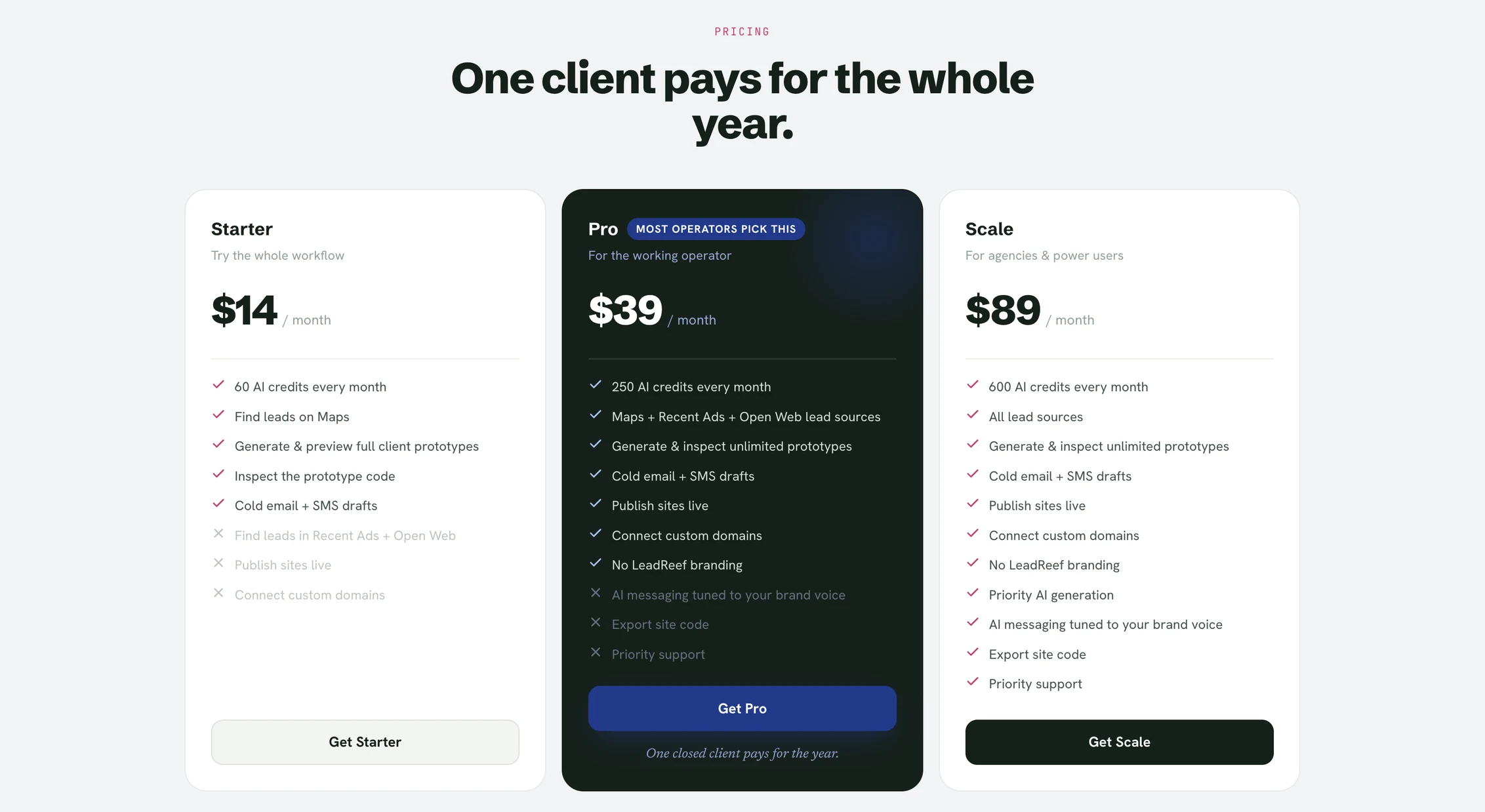
Their billing follows different logic, though both let you in for free. Outscraper’s free tier is far the larger: the first 500 places cost nothing, then you pay per record — cheap when volume is all you are after. LeadReef’s free search is a one-time 10 leads, no card. Beyond that, LeadReef is $14 a month for 60 credits, and each credit buys a score, a prototype and a drafted pitch, not a row of data. So there is no tidy dollar-for-dollar comparison. It is raw records by the thousand set against a handful of finished pitches.
Data pipeline, or sales workflow
Pick LeadReef if your aim is to sell web redesigns and you want the pitch assembled for you. It scores the lead, builds a prototype, and drafts the cold email and SMS, for $14 a month, across three sources on Pro. It suits the freelancer or agency whose job is landing the design work, not wrangling data.
Pick Outscraper if you want raw business data at scale and intend to build your own pipeline around it. Its breadth, its API and its pay-as-you-go pricing are made for exactly that, and on that ground it does far more than we do.
LeadReef runs a partner program with a recurring commission, which counts if you recommend your stack to other freelancers. Outscraper pays referrers too, so both reward a referral; ours is the recurring sort. There is a partner page if that is you.
What actually separates them
Outscraper is a data engine: raw business records from fifty sources, plus contacts, exports and an API, billed by the record. LeadReef handles one job from start to finish — selling web redesigns. It flags the failing-site business, scores it, builds the prototype, and writes the pitch. Outscraper gives you data to build a pipeline; LeadReef gives you a pitch to send. If what you are after is raw, wide, scriptable data to power your own workflow, Outscraper is the broader platform, and that is a genuine strength.
How we compared
The Outscraper facts here were pulled from their live pages, chiefly their home page, where the sources, the API and the per-record pricing are listed. We verified the source count, the export and API, the pricing model, the referral program, and that it neither scores, builds nor drafts. No Outscraper plan was purchased for this. Because pricing moves, Outscraper’s own page wins over anything here whenever the two disagree. LeadReef’s figures are its public pricing. The full tools comparison sets both against the rest of the category.
Common questions
Is LeadReef a good Outscraper alternative?
That comes down to your goal. Outscraper is a scraper: raw business records from 50+ sources, with contacts, CSV and an API, all billed pay-as-you-go. LeadReef is made specifically for selling web redesigns — it scores the site, mocks up a prototype and writes the cold email and SMS. Two tools built for two different jobs.
Outscraper vs LeadReef: what is the real difference?
Outscraper pulls raw business data from 50+ sources and delivers it to you or your CRM. It will not score a lead, assess a site, build a page or compose a message. LeadReef runs that entire web-design workflow across three sources (Recent Ads and Open Web on Pro) and gives you back a scored lead, a prototype and a drafted pitch.
Does Outscraper build sites or write outreach?
No. It is a data platform, and putting together pages or writing messages is simply outside its remit. LeadReef assembles a single-page prototype from the business’s own reviews and photos, then writes the email and SMS to go alongside it.
Which is cheaper, Outscraper or LeadReef?
Their billing works on different terms. Outscraper is pay-as-you-go with a free tier, which keeps raw pulls cheap; LeadReef is $14/mo and every credit yields a scored lead, a prototype and a drafted pitch. So it is raw data priced per record versus a smaller count of finished pitches.
Should a developer use Outscraper or LeadReef?
If you need raw data to feed your own app or pipeline, Outscraper’s API and breadth are a strong match. If you want to find, assess, build and pitch web redesigns without stitching a pipeline together yourself, LeadReef is the finished tool for that single job.
Can I try LeadReef free?
Yes. LeadReef’s free search hands you your first 10 leads with no card, drawn from 10 business types across 10 cities. That is smaller than Outscraper’s free tier of 500 places, and you get it just once. Building the prototype and drafting the email and SMS begin on a paid plan, starting at $14 a month.
The quickest way to judge any of this is on your own market. Run a free LeadReef search: pick one of 10 business types and one of 10 cities, and your first 10 leads cost nothing, no card needed. Paid plans open every business type in any city you choose.